
Why the Future of CPG Belongs to Marketers Who See the Whole Picture
Ryan Garrison
Date: December 10, 2025
Share
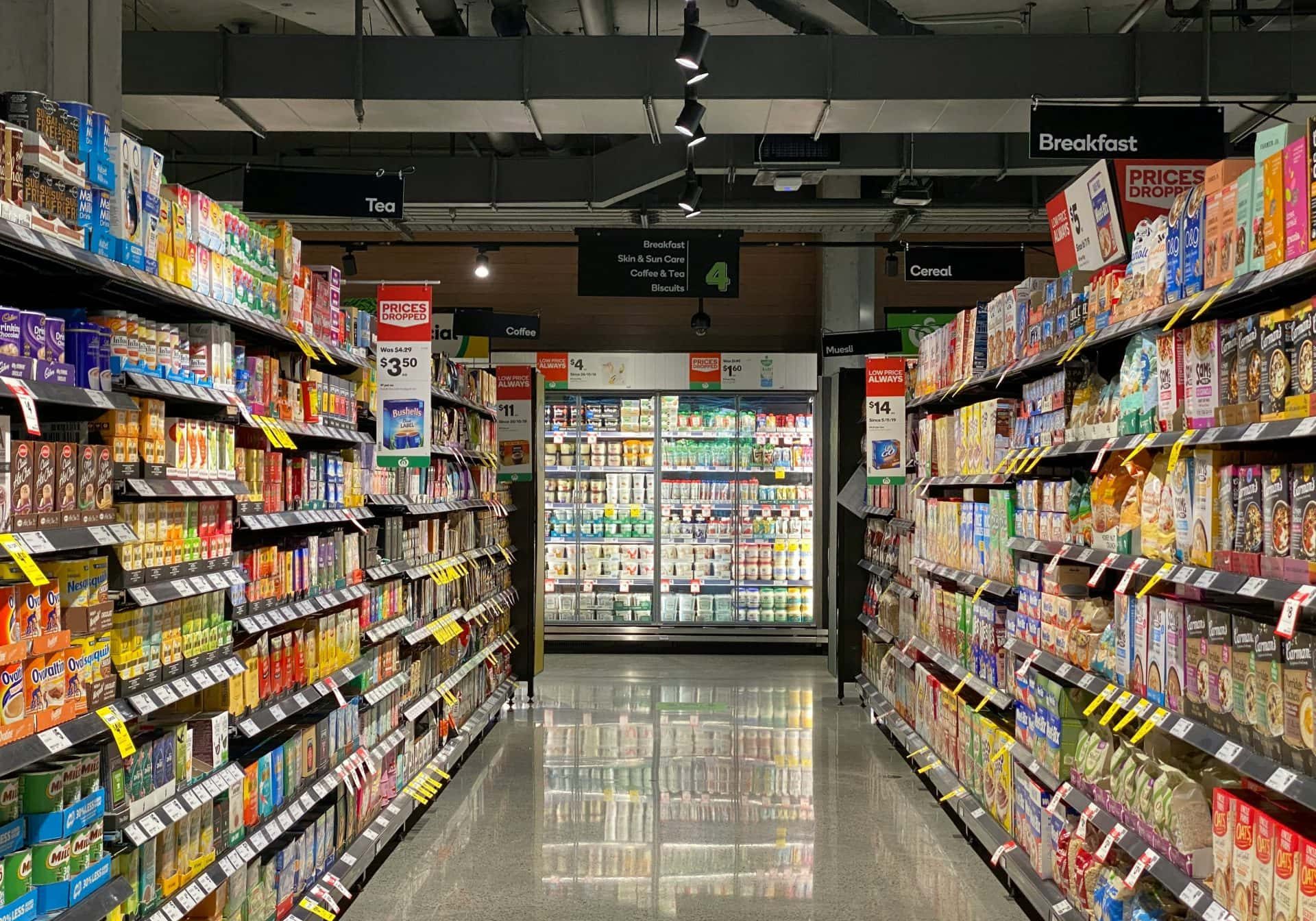
Today’s CPG marketing leaders are asked to do more than drive awareness. You’re responsible for ROI, efficiency, commercial alignment, retailer credibility, and shaping a narrative that holds up across the entire business.
The marketing mandate has never been higher
Every decision is now judged on impact—not intention.
Budgets are tighter. Retail media reporting is splintered. AI is rewriting workflows. And product lifecycles move faster as consumer demands, resulting formulations, and retailer expectations shift in near real time.
The organizations winning in this environment aren’t simply spending more—they’re seeing more. They understand how formulation changes shape the claims you can make, how those claims influence your on-pack messaging and digital shelf optimizations, how that story carries through to off-platform channels (social, programmatic, CTV) and on-platform RMN campaigns, and how all of it ultimately creates a clearer perception of “value” for your brand. When marketing sees those connections in real time, the work becomes cleaner, more accountable, and far easier to defend—both internally and externally.
Modern marketing is a system—not a set of channels
Disconnected tactics create noise, waste, and rising costs.
Today’s shopper largely defines “value” two ways:
- the lifestyle-driven consumer who upgrades when the product aligns with their goals
- the price-sensitive consumer who still cares deeply about quality and will switch if something better signals winning attributes
Marketing sits squarely in this tension.
It’s marketing’s job to bring forward the attributes that move a product from commodity to “must-have”—on pack, on the digital shelf, and across the retail media networks where decisions are increasingly made.
It’s marketing’s job to ensure the same value story shows up in paid social, programmatic, CTV, creator content, and search—so the consumer sees one consistent message, not five competing ones.
And it’s marketing’s job to give sales and category teams a narrative strong enough to earn space, distribution, and support from retailers. When the system is connected, marketing morphs into a commercial engine—and away from being viewed as a cost center.
And this is playing out in the data: only 52% of senior marketers say they can clearly prove marketing’s value inside their organizations.
Why the right partner now matters more than ever
Even the strongest CMOs can’t carry this ecosystem alone—and most agency models make the work harder, not easier.
Most CPG organizations rely on a patchwork of agencies, each owning a slice of the plan. The problem?
They don’t operate from the same brief, they don’t share context, and they don’t see the whole business. Capgemini’s CMO Playbook found that only 26% of organizations are satisfied with the value they get from external agencies—largely due to fragmented partnerships that create duplication, inconsistent execution, and inflated costs.
A story that was tight at the start becomes loose by the time it hits the market. Messaging drifts. Budgets scatter. The left hand doesn’t know what the right is doing.
To win now, CMOs need a partner that:
- Threads the same message through every tactic so every dollar reinforces the same story
- Evaluates ROI and ROAS across channels—and redeploys dollars that aren’t earning their keep
- Builds the case for incremental investment using incremental ROAS and incremental revenue per dollar
- Understands upstream signals coming from ingredient suppliers, data providers, and retailer expectations
- Strengthens retail conversations with clear, commercially aligned storytelling
- Stretches budgets intelligently when dollars must go further than ever
When a partner sits at the center of the CPG ecosystem—not at the edge of one channel—you get clarity that fractured agency models can’t deliver.
Seeing across the ecosystem keeps marketing ahead of the market
Early signals drive better decisions.
When your partner works closely with leading data companies and ingredient suppliers, you start seeing changes before they hit your P&L or digital shelf metrics.
Shifts in ingredient demand. Cost pressure that may force formulation changes. Category narratives retailers are about to prioritize. Early movement in search and social behavior.
When you can see these signals early, you can redirect messaging before competitors react, shift spend before performance falls, and help sales walk into retailer meetings with a story that’s timely, differentiated, and credible.
Even lean budgets can work like big ones
It’s not always about spending more—it’s about spending smarter.
When your system is connected, small budgets carry farther.
A usage-approved influencer program activated only in priority growth markets, wrapped around retail locations with tight 3–5 mile targeting on social and programmatic, builds meaningful awareness.
Pair that with national RMN search campaigns capturing high-intent shoppers, and suddenly a lean budget behaves like a far larger one—because every dollar is pulling the same direction.
This is the future of CPG marketing
The next decade belongs to marketing leaders who operate with full-system clarity. Leaders who know when to protect margin and when to accelerate volume for a liquidity event. Leaders who can stand in front of finance, sales, and retail partners and deliver a clean, confident story:
Here’s what we’re doing. Here’s why it works. Here’s the proof.
The right partner doesn’t just execute the plan—they strengthen it, sharpen it, and make it easier to defend.
And in a world where CPG keeps getting more complex, clarity becomes the competitive advantage that defines who wins.
If you’re ready for a partner who can help bring this level of clarity to your business, let’s talk.